


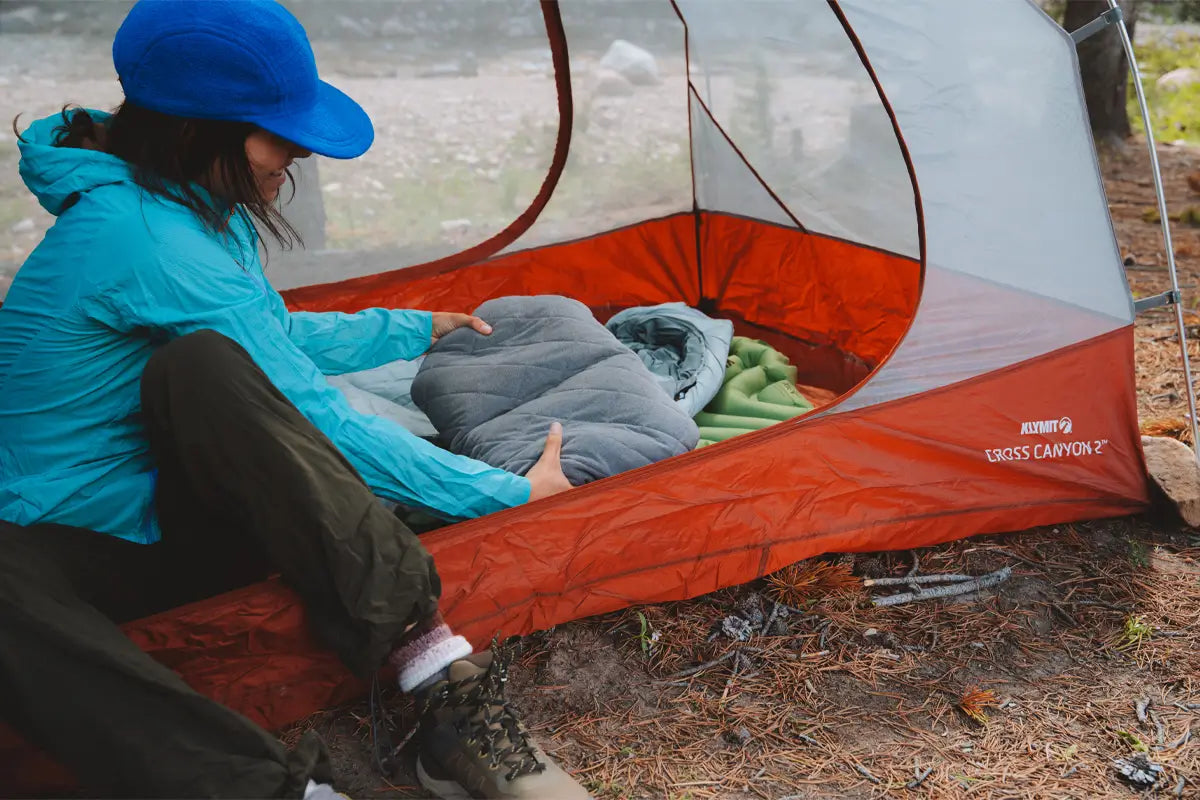


Spring is the perfect time to check in on your gear. After months of storage, or a full season of adventures, your camp gear may need a little attention before heading back outside. A quick spring clean not only keeps your gear fresh but also helps extend its lifespan so it’s ready for many more nights under the stars.

How to Clean Your Sleeping Pad
Your sleeping pad takes the brunt of outdoor adventures, picking up dirt, moisture, and wear along the way. A quick clean and proper storage will keep it performing well and ready for your next trip.
Cleaning your pad:
- Mix 2 cups warm water with 1 tablespoon baking soda
- Wipe the pad with a soft cloth
- Rinse thoroughly
- Do not use detergents or put in a washing machine or dryer
Drying your pad:
- Wipe with a dry cloth
- Lay flat in a well-ventilated room until completely dry
- Keep the valve open while drying
Storing your pad:
- Wipe off any remaining dirt
- Store rolled up in its stuff sack or laid flat
- Flip the valve to “deflate” and do a quick roll to push out most air
- Unroll and then slowly roll tightly to expel remaining air

How to Clean Your Sleeping Bag
Your sleeping bag works hard to keep you warm and comfortable, but over time it can collect dirt, sweat, and oils. A proper clean at the start of the season helps maintain its loft and insulation for many nights under the stars.
When washing your sleeping bag:
- Use a front-loading washing machine
- Avoid agitator-style machines, which can damage stitching and insulation
- Wash on a gentle cycle with cool water
- Use a down-specific soap or gentle detergent designed for technical gear
When drying your sleeping bag:
- Use the no-heat or air-fluff setting on your dryer
- Check the bag periodically during the drying process
- Add 2-3 clean tennis balls or a pair of clean sneakers once the bag is nearly dry to help restore loft

How to Clean Your Camp Pillow
Your camp pillow deserves a quick refresh before the season starts. Most inflatable camp pillows can be cleaned using a similar method to sleeping pads.
For the pillow insert:
- Wipe down with a cloth using warm water and baking soda
- Rinse with clean water
- Allow the pillow to air dry completely
For removable pillow covers:
- Wash in a washing machine on a normal cycle
- Let the cover fully dry before reattaching
Start the Season Ready
Taking a little time to clean and check your gear before your first trip can make a big difference once you’re out at camp. Proper cleaning and storage can help prevent mold, mildew, and damage, keeping your gear ready for the next adventure. A well-maintained sleeping pad means better comfort, longer gear life, and fewer surprises when it’s time to settle in for the night.
So give your gear a quick refresh, pack it up, and get ready to sleep outside again.

'%3e%3cg id='Final-Copy-2_2_' transform='translate(1275.000000, 200.000000)'%3e%3cpath class='st0' d='M7.4,12.8h6.8l3.1-11.6H7.4C4.2,1.2,1.6,3.8,1.6,7S4.2,12.8,7.4,12.8z'/%3e%3c/g%3e%3c/g%3e%3c/g%3e%3cg id='final---dec.11-2020'%3e%3cg id='_x30_208-our-toggle' transform='translate(-1275.000000, -200.000000)'%3e%3cg id='Final-Copy-2' transform='translate(1275.000000, 200.000000)'%3e%3cpath class='st1' d='M22.6,0H7.4c-3.9,0-7,3.1-7,7s3.1,7,7,7h15.2c3.9,0,7-3.1,7-7S26.4,0,22.6,0z M1.6,7c0-3.2,2.6-5.8,5.8-5.8 h9.9l-3.1,11.6H7.4C4.2,12.8,1.6,10.2,1.6,7z'/%3e%3cpath id='x' class='st2' d='M24.6,4c0.2,0.2,0.2,0.6,0,0.8l0,0L22.5,7l2.2,2.2c0.2,0.2,0.2,0.6,0,0.8c-0.2,0.2-0.6,0.2-0.8,0 l0,0l-2.2-2.2L19.5,10c-0.2,0.2-0.6,0.2-0.8,0c-0.2-0.2-0.2-0.6,0-0.8l0,0L20.8,7l-2.2-2.2c-0.2-0.2-0.2-0.6,0-0.8 c0.2-0.2,0.6-0.2,0.8,0l0,0l2.2,2.2L23.8,4C24,3.8,24.4,3.8,24.6,4z'/%3e%3cpath id='y' class='st3' d='M12.7,4.1c0.2,0.2,0.3,0.6,0.1,0.8l0,0L8.6,9.8C8.5,9.9,8.4,10,8.3,10c-0.2,0.1-0.5,0.1-0.7-0.1l0,0 L5.4,7.7c-0.2-0.2-0.2-0.6,0-0.8c0.2-0.2,0.6-0.2,0.8,0l0,0L8,8.6l3.8-4.5C12,3.9,12.4,3.9,12.7,4.1z'/%3e%3c/g%3e%3c/g%3e%3c/g%3e%3c/g%3e%3c/svg%3e) Your Privacy Choices
Your Privacy Choices